
Introduction
Metal panel and cladding systems have become a defining feature of modern architecture, offering durability, energy efficiency, and a sleek aesthetic. However, behind every clean façade lies a highly detailed and coordinated process—shop drawings. These drawings are not just technical documents; they are the bridge between design intent and on-site execution. Understanding their role, structure, and importance is essential for architects, engineers, contractors, and fabricators alike.
What Are Shop Drawings in Metal Cladding?
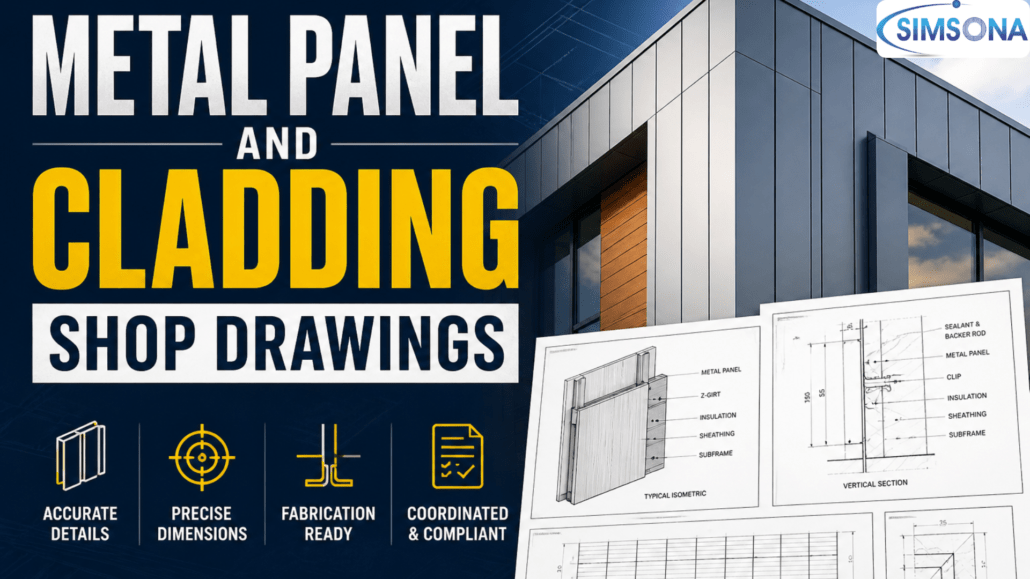
Shop drawings are detailed, project-specific drawings created by contractors or manufacturers to illustrate how metal panels and cladding systems will be fabricated and installed. Unlike design drawings, which focus on concept and general layout, shop drawings dive into precise dimensions, materials, fastening systems, joint details, and installation sequences.
For metal cladding, these drawings typically include panel layouts, support framing, anchoring methods, and interface details with other building components such as windows, roofs, and structural elements. They act as a communication tool between stakeholders, ensuring everyone involved understands exactly how the system will come together.
Core Components of Metal Cladding Shop Drawings
Panel Layout and Orientation
One of the most critical elements is the panel layout. This defines how panels are arranged across the building façade, including dimensions, alignment, and orientation. A well-prepared layout ensures visual consistency while minimizing material waste. It also accounts for expansion joints and tolerances, which are essential for metal systems exposed to temperature variations.
Substructure and Support System
Metal cladding does not exist in isolation—it relies on a supporting framework. Shop drawings clearly illustrate the substructure, including brackets, rails, and connections to the primary structure. These details must consider load distribution, wind pressure, and thermal movement. Errors in this section can lead to structural issues or installation delays.
Fixing and Fastening Details
The method of fixing panels—whether visible or concealed—has both structural and aesthetic implications. Shop drawings specify the type, size, and placement of fasteners, along with spacing and edge distances. They also address corrosion resistance and compatibility between different materials, which is crucial for long-term performance.
Joint and Interface Details
Joints between panels and interfaces with other building elements are often the most vulnerable areas for water infiltration and thermal bridging. Detailed sections in shop drawings show sealants, gaskets, overlaps, and drainage paths. These details ensure the cladding system performs as a weather barrier while maintaining its visual integrity.
The Workflow: From Design to Approval
The preparation of shop drawings follows a structured workflow. It begins with reviewing architectural and structural drawings, followed by site measurements to verify dimensions. Fabricators then create detailed drawings using specialized CAD or BIM software.
Once completed, these drawings go through a review and approval process involving architects, consultants, and sometimes clients. Feedback is incorporated, and revisions are made until final approval is granted. Only then can fabrication begin. This iterative process reduces errors and ensures alignment between design intent and practical execution.
Common Challenges and How to Address Them
Coordination with Other Trades
Metal cladding interacts with multiple building systems—glazing, insulation, waterproofing, and structural components. Lack of coordination can lead to clashes or gaps. Integrating shop drawings with BIM models and conducting coordination meetings can significantly reduce these issues.
Managing Tolerances
Construction tolerances can vary, especially in large-scale projects. Shop drawings must account for these variations by including adjustable connections and clear tolerance limits. Ignoring this can result in misaligned panels or installation difficulties.
Material Behavior and Environmental Factors
Metal expands and contracts with temperature changes. Shop drawings must incorporate expansion joints and flexible connections to accommodate this movement. Additionally, environmental factors such as wind load and moisture exposure must be considered in detailing.
Why Shop Drawings Matter
The importance of shop drawings goes beyond technical documentation. They are a risk management tool, a quality assurance mechanism, and a cost-control measure. Accurate drawings reduce rework, prevent material wastage, and ensure smooth installation on-site. They also serve as a reference during construction and for future maintenance.
In complex façade systems, the difference between a successful installation and a problematic one often comes down to the clarity and accuracy of shop drawings. Investing time and expertise in their preparation pays off throughout the project lifecycle.
Conclusion
Metal panel and cladding shop drawings are the backbone of façade construction. They transform conceptual designs into buildable solutions by addressing every detail—from panel alignment to fastening systems and joint performance. By focusing on precision, coordination, and thorough review processes, these drawings ensure that the final installation meets both aesthetic and functional expectations. For anyone involved in façade projects, mastering the art and science of shop drawings is not optional—it is essential.
 301-774-0880